
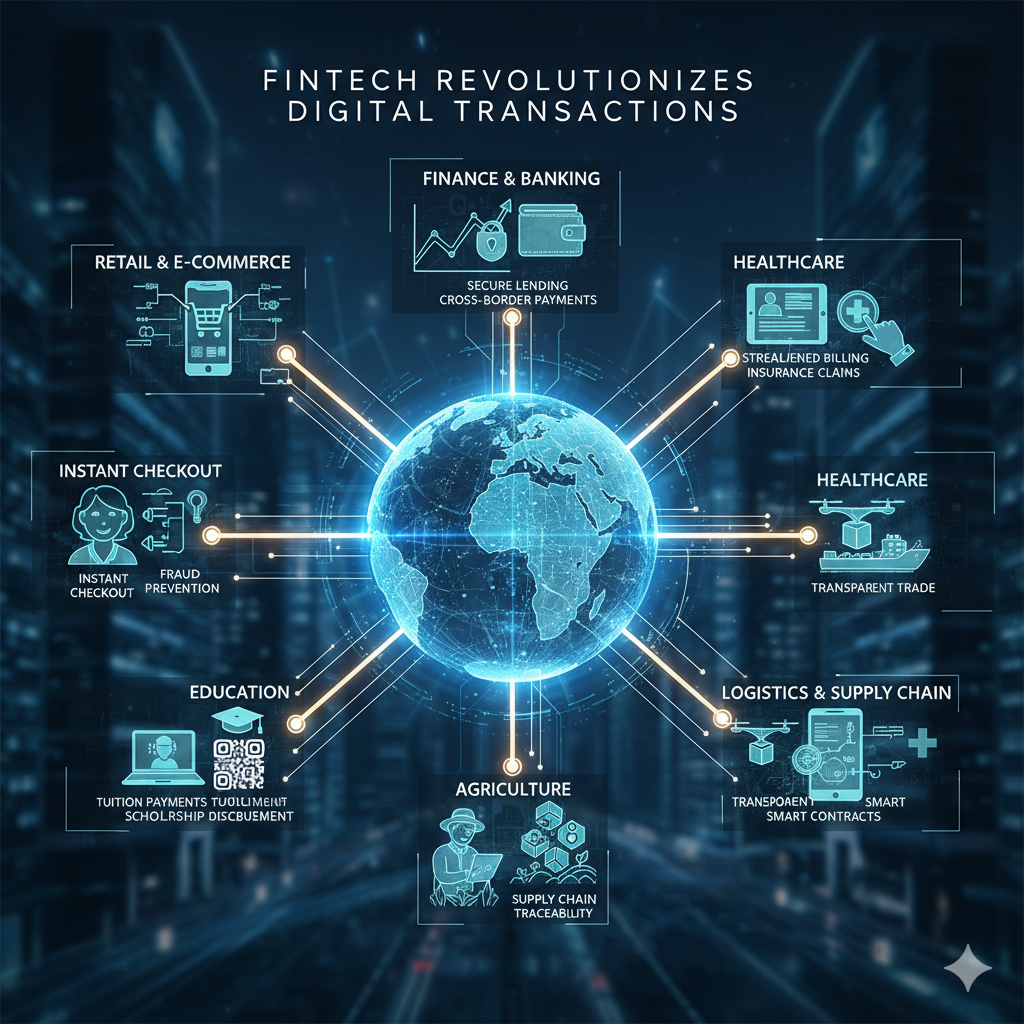
Fintech has evolved over the past ten years from an obscure and specialized industry trend to a significant component of global finance. In 2024, it was predicted that there would be over 3.5 billion fintech users worldwide. As a result, digital transactions are now more secure and efficient. Retail, healthcare, and entertainment are just a few of the businesses that employ it.
Examine Matic Digital’s creative approach to healthcare digital services, where cutting-edge digital technologies increase data-driven decision-making, expedite operations, and improve patient care, to understand how technology is changing the medical industry.
We’ll talk about how this technology is enhancing digital transactions in several domains in this article. In addition to examining digital transactions across industries, this free digital marketing course helps students comprehend how customer trust and business growth are directly impacted by online involvement.
Table of Contents
- Fintech and Digital Payments
- Fintech’s Use in Various Industries
- The Significance of Security in Fintech Solutions
- Conclusion:
Fintech and Digital Payments
Fintech has made financial transactions increasingly safer and more effective. Contactless payments are already the norm in many nations worldwide thanks to Google Pay and Apple Pay’s emphasis on speed, simplicity, and security.
Online payment methods have also been altered by blockchain technology. Decentralized finance (DeFi) gives consumers access to cross-border payment options that are affordable, transparent, safe, and impenetrable.
Many industries have benefited from these technologies, particularly those that need safe and easy transactions, including e-commerce platforms with quick payment gateways.
Fintech has also been used by entertainment platforms to streamline microtransactions, subscriptions, and other payment-related services. For example, blockchain has been used by online casinos to increase their global presence. Additionally, this has improved the speed and security of deposits and withdrawals.
Fintech’s Use in Various Industries
Fintech’s impact extends beyond electronic payments. Healthcare, logistics, retail, agriculture, and education are just a few of the sectors it has changed.
Fintech has enhanced billing and payments in the healthcare industry, for example. It allows for flexible payment options for patients and effective reimbursement for providers. Healthcare providers maintain a stable financial flow while improving patient experience.
Fintech has enhanced supply chains’ financial aspects in logistics. It entails quicker access to working capital, enabling companies to simply and swiftly meet operational demands. Additionally, cross-border transactions are made simpler by digital platforms, which lessens the delays associated with traditional financial procedures.
AI-powered analytics are also helping retailers by forecasting demand, which allows them to manage inventory more accurately, cut waste, and lessen the danger of financial bottlenecks.
Fintech also helps the agriculture industry by giving farmers access to microloans so they can buy equipment and supplies. Additionally, blockchain technology makes it possible to trace agricultural products transparently, which fosters trust throughout the supply chain.
Lastly, fintech has altered payment methods and subscription structures for digital platforms and streaming services in the entertainment sector. The entertainment sector has flourished because to quick payments and easy transactions.
In general, financial inclusion has significantly increased because of fintech technologies. They have made it possible for people and companies in a variety of industries to obtain services that they were before unable to.
The Significance of Security in Fintech Solutions
As we’ve already indicated, security is a top concern for many financial advances. These days, we communicate sensitive financial information several times a day; thus, it’s critical to protect users and transactions.

By employing techniques like sophisticated encryption protocols that guarantee data protection during transmission and machine learning-powered fraud detection systems, fintech solutions are assisting organizations in meeting security requirements. Additionally, fintech helps ensure that regulations such as GDPR (General Data Protection Regulation) and PCI DSS (Payment Card Industry Data Security Standard) are followed.
For users to trust fintech, security is also essential. Platforms that are dedicated to data security and protection are more likely to be selected and used by customers. In addition to being crucial for protecting financial ecosystems, modern fintech solutions also foster customer loyalty and confidence, which promotes sustainable industry growth.
Conclusion:
Fintech has undoubtedly changed digital payments and transactions. Fintech has had a significant impact on a wide range of industries, including healthcare, logistics, retail, and entertainment, in addition to financial activities.
AI, blockchain, and advanced analytics are examples of cutting-edge technology that have significantly increased operational efficiency, resulting in previously unheard-of growth. A strong dedication to security lies at the heart of it all. Now that there are strong standards for encryption, fraud detection, and compliance, businesses and consumers may feel more secure about
There is boundless opportunity for creativity as technology advances. Global economies will undoubtedly become more interconnected, safe, and financially inclusive.